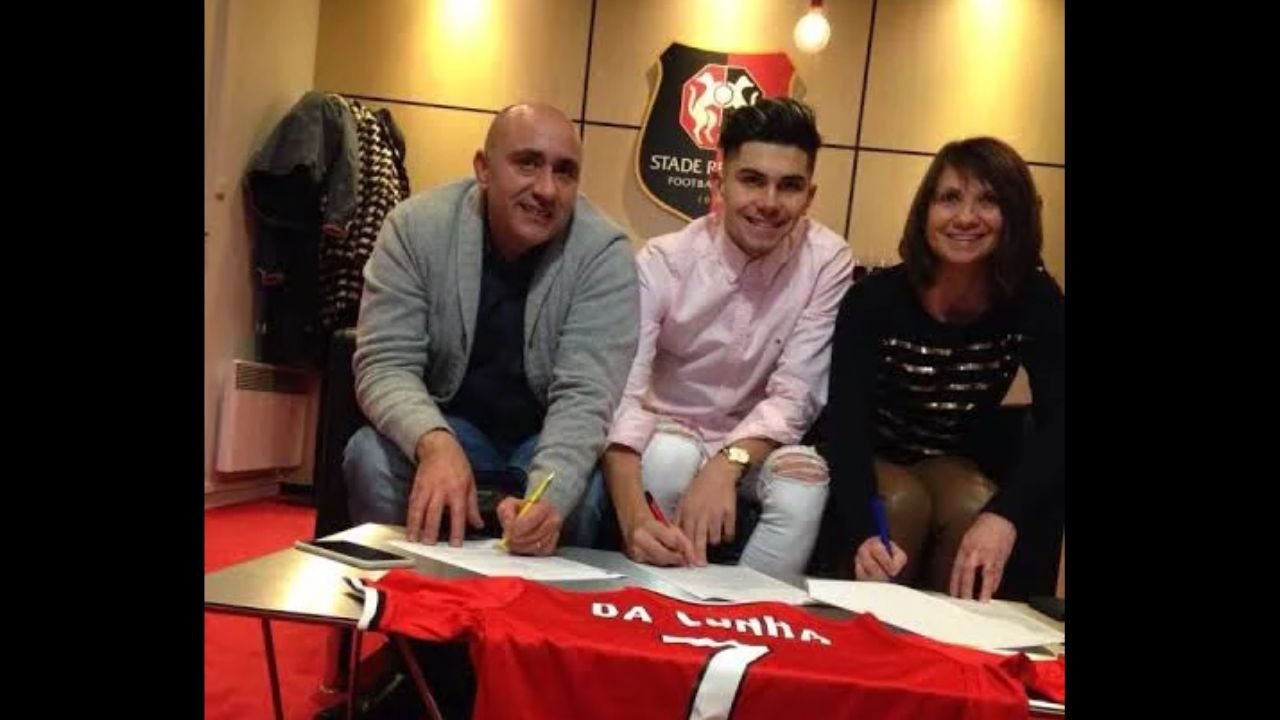
Lucas Da Cunha was born in Roanne, France, and has Portuguese roots through his father, Alberto. Recent profiles describe a French-Portuguese family background, while his mother’s identity is less publicly documented. His September 2026 arrival in senior France-team coverage renewed interest in those origins. The confirmed distinction is between his French birthplace, his Portuguese paternal heritage and the separate question of his international football career.
French Birthplace
Da Cunha was born on June 9, 2001, in Roanne, in France’s Loire department. His local background is documented by his early club, Roannais Foot 42, and later professional biographies. He therefore has a clear French birthplace and upbringing, regardless of the Portuguese connection reflected in his family name.
Birthplace, heritage and sporting nationality are related but different facts. Being born in France does not erase a Portuguese parent, and having Portuguese roots does not mean he was born or raised in Portugal. Keeping those distinctions clear answers the origin question more accurately than applying one broad label to every part of his background.
Father Alberto
His father is Alberto Da Cunha. Roannais Foot 42’s official reporting identified Alberto beside Lucas during a 2019 celebration of the young player’s achievements. That direct club reference provides stronger support for the name than a biography that merely repeats it without showing where it came from.
Recent profiles describe Alberto as Portuguese and as someone who prefers to remain outside the spotlight. His son’s growing public profile does not require him to become a media personality. The relevant family details are his identity, heritage and documented support, rather than private information about his daily routine or finances.
His Mother
The material reviewed provides less detail about Da Cunha’s mother. Some recent profiles describe her as French, but no sufficiently clear primary identification of her name was located here. That gap should remain visible rather than be filled with a guessed identity or a name taken from an unrelated social-media account.
Photographs and early interviews establish that his parents supported him, even where both are not individually named. A family profile can acknowledge that support without claiming a complete biography for each parent. The absence of a widely published name is not evidence of estrangement, a family dispute or any other private circumstance.
Portuguese Roots
Da Cunha’s father’s background is the basis for the Portuguese heritage discussed in football profiles. Recent reporting has also connected that heritage with the question of whether he might represent Portugal. The family connection is a biographical fact, while sporting eligibility and selection depend on additional football circumstances.
A surname alone would not be enough to establish those details, but the reporting goes beyond the name by identifying his father’s origin. That is the useful evidence. It should not be expanded into an unsupported claim about the whole family’s citizenship documents, language use at home or the exact place where every relative was born.
Parental Support
In a 2016 interview published by Roannais Foot 42, Da Cunha spoke about staying in regular contact with his parents after moving away for training. He described their support continuing despite the distance. That is a direct early account of the family’s role, rather than an invented explanation written after his later success.
The interview is especially useful because it captures the period when he was still developing, before senior professional recognition. It shows that the parents’ involvement was not a story created only after major achievements. However, it does not provide every detail of the sacrifices or decisions behind the move, so those should not be imagined.
Football Development
Da Cunha played locally for Roannais Foot 42 before entering the Rennes youth system. His early club has continued to recognize his achievements, including his success with Rennes’ youth team. That continuity connects his professional career with the community and family setting in which he first developed as a player.
Later moves took him through other football environments before he joined Como. The Italian club’s official announcement confirmed his Roanne birthplace and Rennes development. Those professional records support the geographical timeline without requiring an unrelated season-by-season statistical account in an article focused on his parents and origins.
France Team Update
September 2026 reporting described Da Cunha’s senior France breakthrough, which brought fresh attention to his Portuguese roots. Profiles discussed the contrast between a French upbringing and the paternal connection that had previously made Portugal part of the international conversation around him.
That development should not be described as rejecting his family heritage. Representing a national team is a sporting decision and does not erase a parent’s background. The available reporting does not require invented conversations between father and son about loyalty, nor does it establish that the family experienced disagreement over the choice.
Family Background
For readers checking in November 2026, Lucas Da Cunha is French-born, with Portuguese heritage through his father Alberto. His mother is less publicly documented, and her name should not be guessed. The early club interview and later family references establish parental support across his development from Roanne to professional football.
The recent international attention explains why the origin question has returned, but the family background itself is not new. The clearest account distinguishes birthplace, paternal heritage and football representation, while keeping unverified personal details out. That provides a focused answer to the parents search without reducing a mixed family background to a single surname or inventing private family decisions.