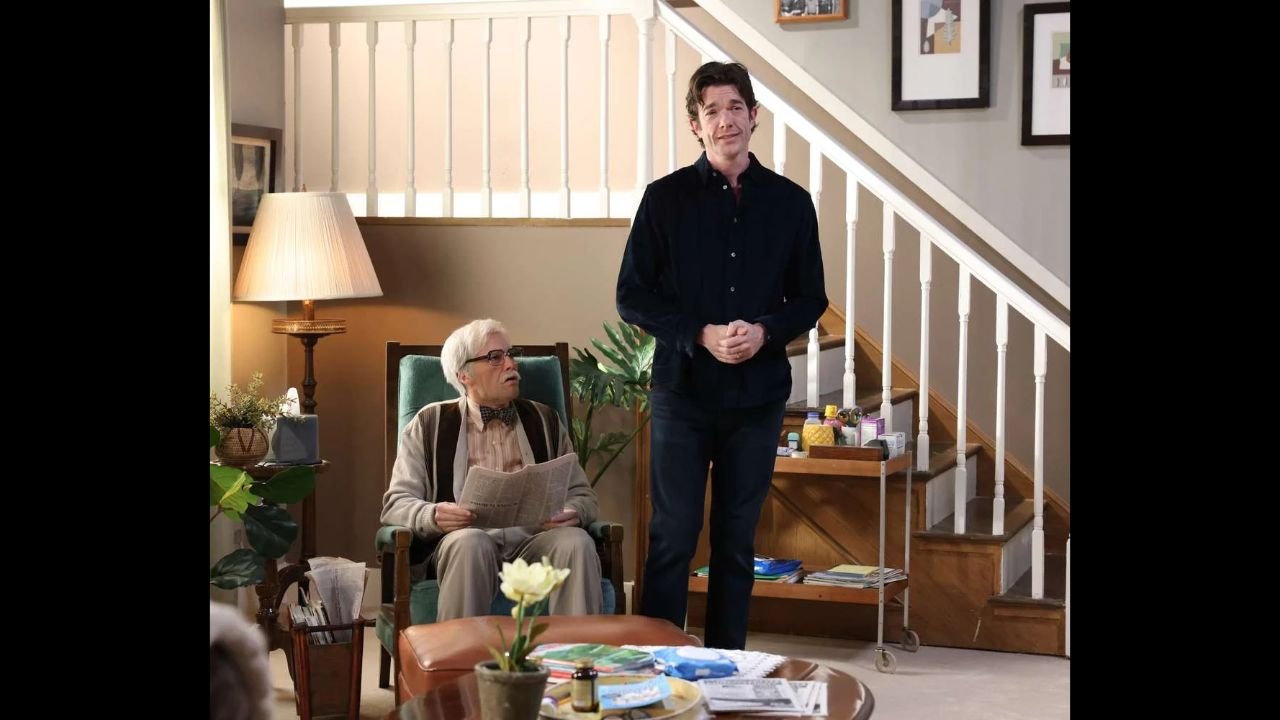
Saturday Night Live’s viral skit about aging parents has sparked a nationwide conversation about family caregiving, gender inequality, and the responsibilities adult children face when their parents grow older. The sketch, titled “Sister,” aired on November 14, 2026, with comedian John Mulaney leading a satirical advertisement for a supposedly free elder care service. Its central joke—that daughters are often expected to care for elderly parents while their brothers continue their normal lives—has resonated with millions of viewers.
What Is the SNL Skit?
The SNL aging parents sketch, officially titled “Sister,” presents a fictional elder care service through a television commercial.
John Mulaney portrays a man concerned about finding suitable care for his aging father.
Rather than paying for professional assistance or taking responsibility himself, he discovers a convenient alternative: asking his sister to handle everything.
The advertisement describes the fictional service as available around the clock without any financial cost.
The joke becomes increasingly uncomfortable as viewers realize that the supposed service is simply an adult daughter expected to sacrifice her own time, career, and personal freedom.
When Did It Air?
The sketch premiered on Saturday, November 14, 2026, during an episode of Saturday Night Live hosted by John Mulaney.
The prerecorded segment quickly gained attention after NBC shared it online.
By November 16, the video had reportedly received more than two million YouTube views.
Clips also circulated through Facebook, Instagram, and other social media platforms, attracting comments from people who recognized similar situations within their own families.
The response transformed a short comedy performance into a wider discussion about the realities of caring for older relatives.
Who Appears in It?
John Mulaney, Jane Wickline, Kenan Thompson, Andrew Dismukes, and Ben Marshall appear in the sketch.
Mulaney plays one of the adult sons who enthusiastically recommends the fictional caregiving arrangement.
Jane Wickline portrays a sister whose responsibilities extend far beyond what her brother acknowledges.
Kenan Thompson and Andrew Dismukes appear as other men who benefit from relying on female family members.
Ben Marshall plays the sister’s husband, who also becomes affected by the demands placed on her.
Their performances emphasize the contrast between the brothers’ comfortable lives and the exhausting work undertaken by their sisters.
Why Is It Funny?
The comedy comes from presenting an unfair family arrangement as though it were an innovative commercial product.
The men describe the benefits of having someone manage medications, appointments, personal care, and household responsibilities.
Meanwhile, the women are shown handling the practical and emotional consequences.
One sister leaves her job and relocates to provide full-time assistance.
Her brother enjoys the arrangement without seriously considering what it costs her.
The central message is that unpaid family care may appear free to one person while imposing enormous costs on another.
Why Did It Go Viral?
The sketch became popular because its exaggerated premise closely resembles experiences reported by real caregivers.
Many viewers described feeling recognized by its portrayal of daughters who become responsible for aging parents.
Others expressed frustration that such expectations remain common despite changes in women’s professional and personal lives.
The video also encouraged conversations about siblings who contribute unequally to family responsibilities.
For some viewers, the sketch was entertaining. For others, it brought attention to years of exhaustion and resentment.
Its popularity reflects how a familiar family problem can become a major public conversation through comedy.
Caregiving Statistics
Research supports the broader issue highlighted by the sketch.
According to the 2025 Caregiving in the U.S. report from AARP and the National Alliance for Caregiving, approximately 63 million American adults provide family care.
Women account for around 61% of caregivers, demonstrating that caregiving responsibilities remain unevenly distributed.
These responsibilities can include coordinating medical treatment, managing prescriptions, providing transportation, and helping with everyday activities.
Many caregivers also maintain jobs or raise children while supporting older relatives.
The combination can create substantial financial, physical, and emotional pressure.
Melinda Gates Reacts
Melinda French Gates responded to the viral sketch in November 2026, explaining why its portrayal of family caregiving reflected genuine social problems.
Using research from her organization, Pivotal, she examined several of the advertisement’s claims.
She highlighted evidence showing that women frequently experience career interruptions, financial losses, and emotional stress because of caregiving responsibilities.
French Gates also challenged the suggestion that relying on a sister provides care without cost.
Although relatives may not receive wages, their unpaid work can reduce earnings, retirement savings, and professional opportunities.
Her response helped move the conversation beyond entertainment into the economic realities of elder care.
Real Family Experiences
The sketch also encouraged caregivers to share their personal experiences.
In a November 19 Business Insider article, Michelle Gooden, a Virginia woman who left her marketing career to care for her parents, discussed how closely the comedy reflected her situation.
Gooden described the challenges of becoming a full-time caregiver while navigating family responsibilities.
Her experience illustrated how caregiving can dramatically change someone’s career and everyday life.
Stories like hers show why the sketch resonated with people who had already experienced similar pressures.
The Hidden Burden
Caring for an aging parent involves more than helping with household chores.
Family caregivers may need to coordinate medical appointments, communicate with insurance providers, monitor prescriptions, and respond to emergencies.
They may also manage finances and make difficult decisions about long-term living arrangements.
These responsibilities can continue for years.
When one sibling becomes the primary caregiver, the unequal workload can affect employment, relationships, savings, and mental health.
The SNL sketch highlights how easily this work can become invisible to relatives who are not directly involved.
Where to Watch
The original sketch is available through Saturday Night Live’s official YouTube channel.
Viewers can find the video under the title “Sister – SNL.”
It is also featured on NBC’s official website, where the network has published additional information about the performance and audience response.
The segment lasts approximately three minutes and uses the format of a commercial advertisement.
Its short running time has made it particularly easy to share across social media.
Latest Update
As of November 20, 2026, the SNL aging parents sketch remains a widely discussed comedy segment, with coverage extending beyond entertainment publications to news organizations and caregiving advocates.
The November 14 performance has prompted discussions about unpaid labor, financial sacrifices, and the need for families to divide elder care responsibilities more fairly.
For viewers searching for the viral SNL skit about aging parents, “Sister,” featuring John Mulaney and Jane Wickline, is the sketch attracting attention.
Its lasting message is straightforward: caring for elderly parents is an important family responsibility, but the burden should not automatically fall on one daughter or sister.